Last fall, seven students in three Great Neck area high schools were accused of cheating on the SAT exam, possibly paying someone else to take the test for them. Thirteen others have since been accused. Nassau County District Attorney Kathleen Rice is taking the unprecedented step of prosecuting accused test cheaters in the legal system, in our names.
I’m not going to defend cheaters, rich kids, Great Neck or any other party in this sad story. I’m not sure in my own mind what should be done with the young people involved, if they are proven to be involved. I know that politicians are talking tough and over the top against easy targets. Teenagers are always easy targets.
Less than a week into 2012, Mayor George “Butch” Starkie of the incorporated Village of Farmingdale in the Town of Oyster Bay already has earned a 2012 nomination for some major good government award yet to be invented. In an effort to save the cost of two employees and some maintenance costs, Mayor Starkie has been pushing to have the neighboring Suffolk County Water Authority become operator of the village water supply system. Now, reasonable people might make a case for one of the other adjacent water suppliers to be the ones to pump village water. That Mayor Starkie has looked eastward, across the county chasm, is gutsy, realistic and, in the scheme of Nassau County political history, practically momentous.
1. One of Long Island’s five congressional representatives must lose their seat at the end of 2012, or the districts have to be ferociously gerrymandered during this year’s redistricting process. That’s the choice.
2. New York legislators must create 27 federal congressional districts for the 2012 elections, each with an ideal population of 717,707. In Congressional districting, a population deviation between districts of one percent, plus or minus, is considered acceptable. However, it is expected that New York’s congressional districts will again be drawn with a deviation of virtually zero (deviation attracts scrutiny and scrutiny attracts lawsuits).
Already, we have local public officials talking the usual tough talk about getting Long Island’s “fair share” of state aid to school districts. Meanwhile, 360 upstate and rural school districts have formed an alliance (the School Finance Consortium) to shift significant aid money away from Long Island and toward their communities. In newspaper editorials and community forums, there is a new push against Long Island, which is seen as statistically wealthier and far more able to absorb aid cuts.
There are different ways of measuring “high property taxes.” Measured in the percentage of home value paid in taxes, as did a recent Tax Foundation study, the four highest-taxed U.S. counties are all in upstate New York, led by Orleans County, with a median tax burden of $2,408 on a typical $96,900 home. Nationally, property taxes are 1.5 percent of home value. In Orleans County, it’s 2.99.
Taking its cues from the governor, whose school plans revolve vaguely around “consolidation and streamlining,” the Board of Regents has proposed the creation of regional high schools, fed students by local school districts. They’re calling this “partial consolidation,” but we’ve been there and done that. Central High Schools of exactly this type were invented specifically for Nassau County in 1917. They worked, but evolving suburban challenges passed them by, so we stopped creating them.
Sewanhaka Central High School (1926), Valley Stream Central High School (1932) and Wellington C. Mepham Central High School (1934) were “fed” by three or four districts with elementary schools only. None of the feeder districts could afford to build or maintain their own high school, and this new arrangement, unique at the time to Nassau County, made sense.
1. What’s the most troubling part of last week’s sudden tax deal in Albany? Is it the total secrecy and record speed in which it was adopted, or the near-universal mislabeling of the episode in the daily media as “higher taxes for the wealthy,” “effective bipartisan leadership,” and everything else for which Superman has fought?
2. I think the worst part is, once again, everyone gets to declare that the problems are solved. Last summer, we were all commanded to cheer the budget deal that already has a $3.5 billion hole, and counting.
The state legislature passed the automobile speed regulation bill and it was signed into law on March 28, 1902. It was huge. In fact, it was sometimes referred to as “the famous Cocks Automobile Law,” named for State Senator William Willets Cocks. In 1901, Member of Assembly G. Wilbur Doughty had sponsored a version that passed the Assembly, but Senator Cocks was seen as the prime mover who personally rounded up influential citizens and officials to go to Albany and ask for relief. In one swoop he became a legislative star. In 1904, he was elected to Congress, where he also achieved some fame as “the Quaker Congressman” and, in particular, as President Roosevelt’s own representative. Years later, Doughty was the mastermind and moving force behind the Republican organization that finally overtook Nassau Democrats in 1917 and destroyed them as a threat within two years. Some of the ruthless legislative maneuvers were challenged in court, and successfully defended by the county’s special legal counsel, M. Linn Bruce. So we have a kind of circle. There were other circles.
“The township of North Hempstead has 100 miles of macadam roads, constructed at a cost of $1,000,000. These were built for the use of the farmers of the township to enable them to get their produce to the New York markets. With good roads they are able to carry bigger loads and get bigger profits…the farmers of North Hempstead have been driven off their highways, which are now almost monopolized by millionaire automobilists…”
These are the opening words of Mr. M. Linn Bruce, speaking on behalf of the town and county governments of Nassau County before the State Senate Codes Committee in Albany early in 1902. His measured and persuasive testimony was published around the state. Many were impressed. Though he had never formally held a public or political position, he was elected Chairman of the Manhattan Republicans the next year. In 1904, he was elected New York’s Lieutenant Governor.
Wheeling, or bicycling, was huge in the 1880s. “Wheelmen” clubs were forming everywhere. Success Pond was a favorite excursion destination, and not just because of the beautiful views of the sun reflecting off of still, mirrored sheet of water. The pond was situated in between the macademized (hardened) Flushing-North Hempstead Turnpike and the planked Jamaica-Jericho Turnpike. It was also the point where stagecoach lines met, and the smaller roads in the immediate vicinity were kept in pretty good shape.
The party’s over.
If a whole lot of absentee ballots pour in by the end of this week, we may luck out and hit or come close to 23 percent turnout. In a time of legitimate crisis, when county residents want to understand, when they need options, choices and ideas, when there should be critical public discussions and debates, our political parties have turned off three out of four who have bothered to register.
Page 8 of 22
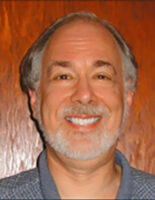
<< Start < Prev 1 2 3 4 5 6 7 8 9 10 Next > End >>Michael Miller is a freelance writer, designer and strategic consultant who has worked in state and local government. Email: millercolumn@optimum.net